
Skip to content

The business card
that follows up.

One tap hands over your details and asks for theirs. Minutes later the follow-up goes out in their language, answers what they actually asked, and offers a time. You buy the card once, from $100. The follow-up is a subscription, from $9 a seat a month.

A matte black Hologram card, its machined edge catching an iridescent sheen.

One tap opens your page on any phone, with no app to download and no account to create. Nobody has to be talked into it.

The follow-up goes out within minutes, while the conversation is still fresh — not next week, when the cards come out of the jacket.

It writes in seven languages, so the lead you met in Dubai is answered in Arabic instead of being answered in your English.

What you are really up against

You are not losing deals to a better business card. You are losing them to the follow-up nobody sent.

Every vendor ships the same chip and the same tap, and the chip costs pennies. What decides whether a stand pays for itself is the message that lands afterwards — and for most of the hands you shook this year, that message was never written.

Silence.

That is what most of the people you met this year heard back from you. Not a clumsy follow-up — nothing at all. It is the easiest competitor you will ever beat, and almost nobody in your market is beating it.

The tap

You get one second of their attention, and this page spends it asking for one thing.

They press once to save you, and once more to hand their own details back — that is the whole interaction. It opens on a jammed hall network because the page weighs under 100 KB and runs nothing that can block it, and it still works with JavaScript switched off on a locked-down work phone.

A phone held against a Hologram card at the moment of a tap.

An illustration of the tap page as it appears on the visitor’s phone.

hologram.to/alexandro

Alexandro Reis

Head of Partnerships · Meridian Logistics

Save to contacts
How to reach him
a.reis@meridian.coWork email
+351 91 442 0118Mobile · WhatsApp
Send yours backEmail me the rates — selectedOne message, with the current rate card.WhatsApp is fine too — selectedSay stop and it stops.Keep me on the newsletter — not selectedMonthly, and separate from the two above.Send my details

We write down exactly what you agreed to, and when.

The follow-up

The message arrives in their language, so it gets read instead of ignored.

Seven languages go out today, and each one was signed off by native speakers before it was allowed near a customer — never machine-translated from your English and hoped for. Pick a language below and watch the same conversation rewrite itself.

Lena BrandtWhatsAppEinkaufsleitung · Bremen MarineDE

Einwilligung am Stand, 18:42 — sie hat WhatsApp selbst gewählt, ein Wort von ihr beendet es.

  1. Hallo Lena — ich bin der Assistent von Alexandro, kein Mensch.Sie hatten nach dem Nordkorridor gefragt. Die Raten 2026 für Bremen–Oslo hängen an — Laufzeit 3 Werktage, Zollabwicklung inklusive. Passt Donnerstag 10:00 für 15 Minuten mit Alexandro?
    09:12 · sent · send_material
  2. Ja, schicken Sie die Raten. Donnerstag geht.
  3. Ist eingetragen — Donnerstag 10:00 MEZ, Kalendereinladung ist unterwegs.
    09:15 · sent · confirm_meeting
grounding · 2 sourcesdisclosure · presentSent while they were still at the stand.
The autonomy line

You decide what it may send on its own, and it cannot talk its way past you.

There is no tone slider that creeps towards aggressive and no confidence score that quietly loosens over a quarter. This table is the whole rulebook: what goes out by itself, what waits for your word, and what never happens in your name at all.

What goes out by itself, what waits for your word, and what never happens in your name
VerdictAction
autoSend the brochure they asked for
autoAnswer a question your documents already answer
autoOffer a time, book it, remind them of it
holdQuote a price or offer a discount
holdAnswer an objection about your product
holdChase someone who has gone quiet
neverMessage anyone who never gave you permission
neverSay anything your own documents do not say
The policy gate

Nothing goes out under your name until plain code has checked it.

A model never decides whether a message may be sent — ordinary code does, at the moment of sending rather than when the draft was written, and it keeps the receipt on the message. Somebody who unsubscribed a minute ago beats a draft written an hour ago, every time, which is how your sending reputation survives the year.

outbound.yamlfirst failure wins
  1. has she asked us to stopnever, on any channelpass
  2. did she agree to this channelshe ticked WhatsApp herself, and we kept the wording she sawpass
  3. will this message cost you a feeshe wrote first, so replying is freepass
  4. does local law block itthe German email rule does not reach WhatsAppn/a
  5. does it say a machine wrote itthat line was missing — added in German, then checked againrepair
  6. is this too many messagesone this week, and the last was yesterdaypass
  7. is it a civilised hour theremid-morning where she ispass
  8. can every claim be sourcedboth of them, to your own rate cardpass
  9. does it commit your companyit quotes a price, and a price is yours to givehold
Lena asked what a pallet costs. The draft is good and the number is straight out of your rate card — but a price is a commitment, and commitments are yours to make. It waits for one tap from you, and nothing embarrassing is ever sent in your name.
The CRM

Every lead, every consent and every reply lands in one pipeline you already own.

Popl, Blinq and HiHello assume you run Salesforce or HubSpot, and sync your leads out to it. Most teams working a stand run neither — so the pipeline is built in here, with the tap, the permission and the whole conversation attached to the same person, ready for whoever picks the deal up on Monday.

New3

Priya Nair

Ops Director · Rotterdam Freight

ENBooth 4A20 lead score

Emre Yılmaz

Procurement · Aegean Textile

TRBooth 4A10 lead score

Sofia Lindqvist

Founder · Nord Pack

ENKeyfob10 lead score
Qualified2

Rui Almeida

Head of Logistics · Porto Vinhos

PTBooth 4A50 lead score

Marta Ferrer

Supply Chain · Catalonia Foods

ESSticker40 lead score
Meeting2

Lena Brandt

Purchasing Lead · Bremen Marine

DEBooth 4A90 lead score

Salma Haddad

Regional Buyer · Gulf Cold Chain

ARSticker70 lead score
Proposal1

Nikita Orlov

CEO · Almaty Transit

RUBooth 4A80 lead score
Won1

Jonas Vik

COO · Oslo Kjøl

ENBooth 4A90 lead score
Lost1

Tomás Peixoto

Buyer · Lisbon Bulk

PTSticker0 lead score
The card

Pick the card you want to be seen holding. We print what each one reads at, next to the price.

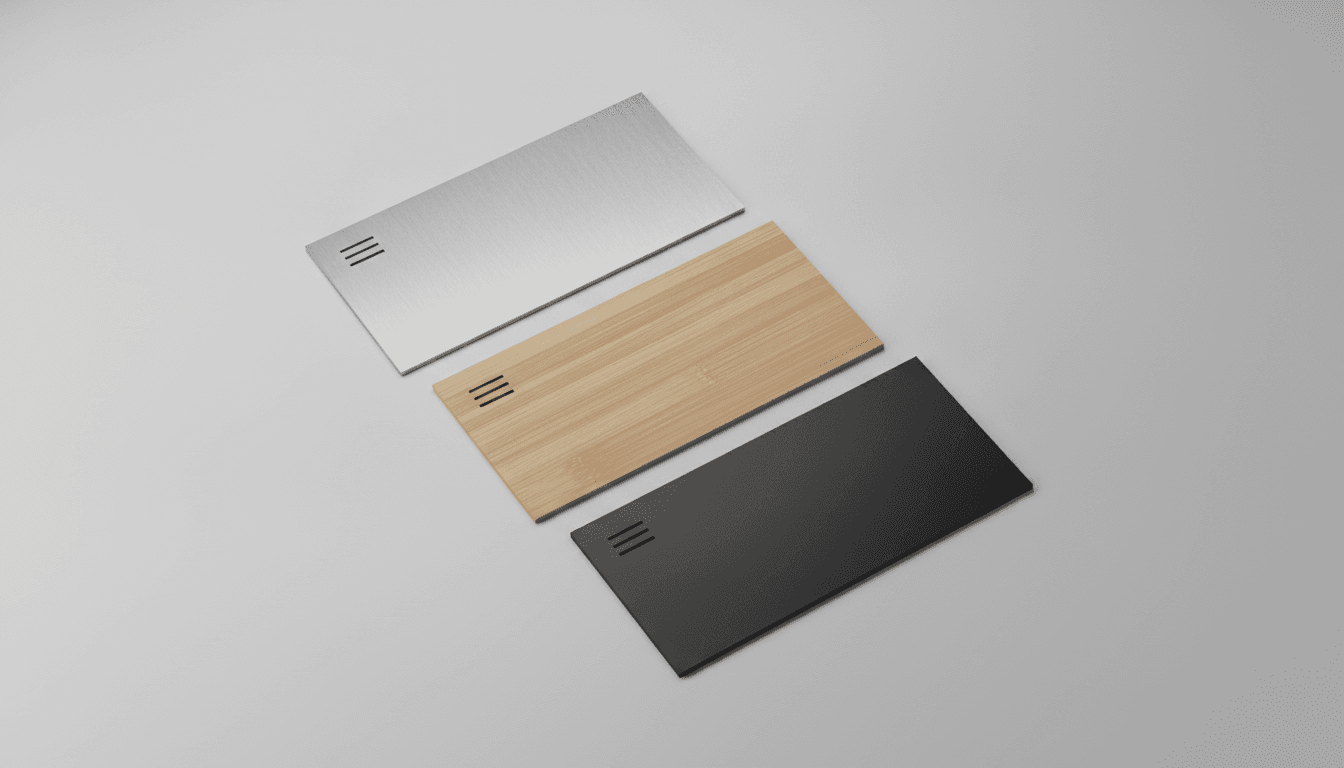
Metal detunes any NFC antenna, ours included, so the steel card wants a deliberate touch rather than a wave — and you read that here, before you pay, instead of learning it on the stand. It is still the card people keep in their wallet and show to other people. PVC is $100, bamboo $150, metal $200, bought once.

Brushed steel, bamboo and anodised black Hologram cards fanned in a row.
On the floor

Work the whole floor from your phone, standing up, with one hand.

The top of the screen is the part that needs you: drafts waiting on your word, the meetings you booked today, the leads going quiet. Not a wall of totals you would read on the train home anyway.

An illustration of the Hologram app’s Home screen as it appears on a phone.

Home
Needs you
  • 4 replies drafted

    Nothing leaves the queue until a person says so.

    Open the queue
  • 2 meetings tomorrow

    First is Lena Brandt at 11:30 Europe/Berlin.

    Open Lena Brandt
  • 3 leads gone quiet

    Nothing from them for a fortnight or more.

    Filter the pipeline
This week

The seven days up to now, against the seven before them.

  • Taps102+72 on last week
  • New leads6+6 on last week
  • Reply rate50%-50pp on last week2 of 4 leads written to
  • Meetings booked2no change
Live tapsAll cards
  • No exchangeMadrid, ESA7kMShared linkunverified34m ago
  • No exchangeVienna, ATK2pRNFC tapverified2h ago
  • Diego SanzMXA7kMShared linkunverified2h ago
  • Home
  • Leads
  • Inbox, 4 waiting
  • Cards
  • More

What buyers ask us before they sign anything

What am I actually paying for, and how often?

Two separate things, and we never bundle them. The card is hardware you buy once — cards start at $100 in recycled PVC, $150 in bamboo and $200 in metal, and the smaller shapes come down from there, as far as $91 for a PVC sticker — and it is yours; it keeps opening your page for as long as you own it, with nothing to renew. The follow-up is software, billed per seat: Pro is $9 a month a seat, or $7 if you pay for the year; Team is $7, or $5 annually. The agent that writes for you is priced separately again, from $30 to $150 a seat a month, on the seats that want it. Buy a card and never subscribe and nothing breaks.

How much is the agent, and which of its three tiers do I need?

There is no single price for it, and no bundle it hides inside. It is three steps, and you pick by how many leads a seat actually works in a month. AI Starter is $30 a seat a month and covers up to 100 leads a month. AI Growth is $70 a seat a month and covers up to 500. AI Unlimited is $150 a seat a month with no cap at all. That is the whole ladder — from $30 to $150 a seat a month — and it is charged per seat, not per workspace, so a team of six where two people work the floor pays for two. It sits on top of Pro or Team rather than replacing either, and the seats that do their own writing pay nothing for it.

Does the person I hand it to have to install anything?

No, and they never will. Their phone opens your page straight from the lock screen, in the browser they already have — no app, no store, no account. That is the whole interaction, and it is over before anybody has to be persuaded through it. The page weighs under 100 KB, so it opens on the worst network in the building.

Could it ever message someone who never gave me permission?

No — and not because we set it that way, but because the product has no path that does it. Someone has to hand you their details and tick the channel themselves before a single message can be addressed to them. Buying a list and blasting it is somebody else’s business model; it also burns the sending reputation that makes your real follow-up land in an inbox rather than a spam folder, which is why we will not sell it to you.

What stops it inventing a price or promising something we cannot deliver?

Two locks, and the second one is the one that matters. Everything the agent writes is checked against your own uploaded documents after it is written — a claim that does not trace back to a page of your rate card never reaches a customer. And a price is treated as a commitment rather than a fact: even a perfectly correct one is held for a human, so the worst case is a message that waits for you, never a message you have to retract.

Which languages, and how do I know they are any good?

English, German, Spanish, Portuguese, Turkish, Arabic and Russian. Every one of them was written and checked by native speakers before it went live — never translated out of English and hoped for, because a German message translated from English reads correctly and still sounds like spam to a German buyer. Outside English the agent is deliberately more cautious and sends more drafts to you for approval until it has earned the rest.

What happens when the person holding the card leaves?

You point the card at whoever takes the role, in a few seconds, from the app. The chip is never rewritten and the card is never thrown away — only the printed name has to change, and plenty of teams do not even bother with that until the next reprint. Their leads, their consent records and their open conversations stay in your pipeline, because they were always yours.

Turn the next handshake into a conversation that is still alive next week.